
团队最近在技术选型时对比了多个方案,这里分享一下我们的调研结果和最终决策依据。

专注C/C++、Linux编程与人工智能领域,分享学习笔记!
感谢各位小伙伴的长期陪伴与支持,欢迎文末添加好友一起交流!

- 前言
- 一、为什么选择Claude Code?
- 二、核心工作流设计
- 2.1 整体流程图
- 2.2 核心模块架构
- 三、实战代码实现
- 3.1 灵感捕捉器
- 3.2 与Claude Code集成
- 3.3 内容生成工作流
- 3.4 质量审查自动化
- 四、完整工作流示例
- 五、让AI工作起来还不够,需要让它"为你工作"
- 六、创作不是终点,分享才是
- 七、总结
- 参考资源
前言
作为一个技术内容创作者,我一直在思考一个问题:如何让AI工具真正融入创作流程,而不是简单的内容生成器?
经过三个月的实践,我摸索出了一套基于Claude Code的AI辅助创作工作流。这篇文章将分享我的实战经验,包括代码实现、流程设计,以及如何让AI成为你的"创作搭档"而不是"替代者"。
一、为什么选择Claude Code?
市面上的AI工具很多,但我最终选择Claude Code作为核心工具,原因有三:
| 对比维度 | ChatGPT | Claude Code | 本地模型 |
|---|---|---|---|
| 代码理解 | ⭐⭐⭐⭐ | ⭐⭐⭐⭐⭐ | ⭐⭐⭐ |
| 上下文记忆 | ⭐⭐⭐ | ⭐⭐⭐⭐⭐ | ⭐⭐ |
| 本地文件操作 | ❌ | ✅ | ✅ |
| CLI集成 | ⭐⭐ | ⭐⭐⭐⭐⭐ | ⭐⭐⭐ |
Claude Code最大的优势在于它能真正"理解"你的项目,而不是孤立地回答问题。它可以读取代码、分析结构、理解上下文,这才是"创作搭档"该有的样子。
二、核心工作流设计
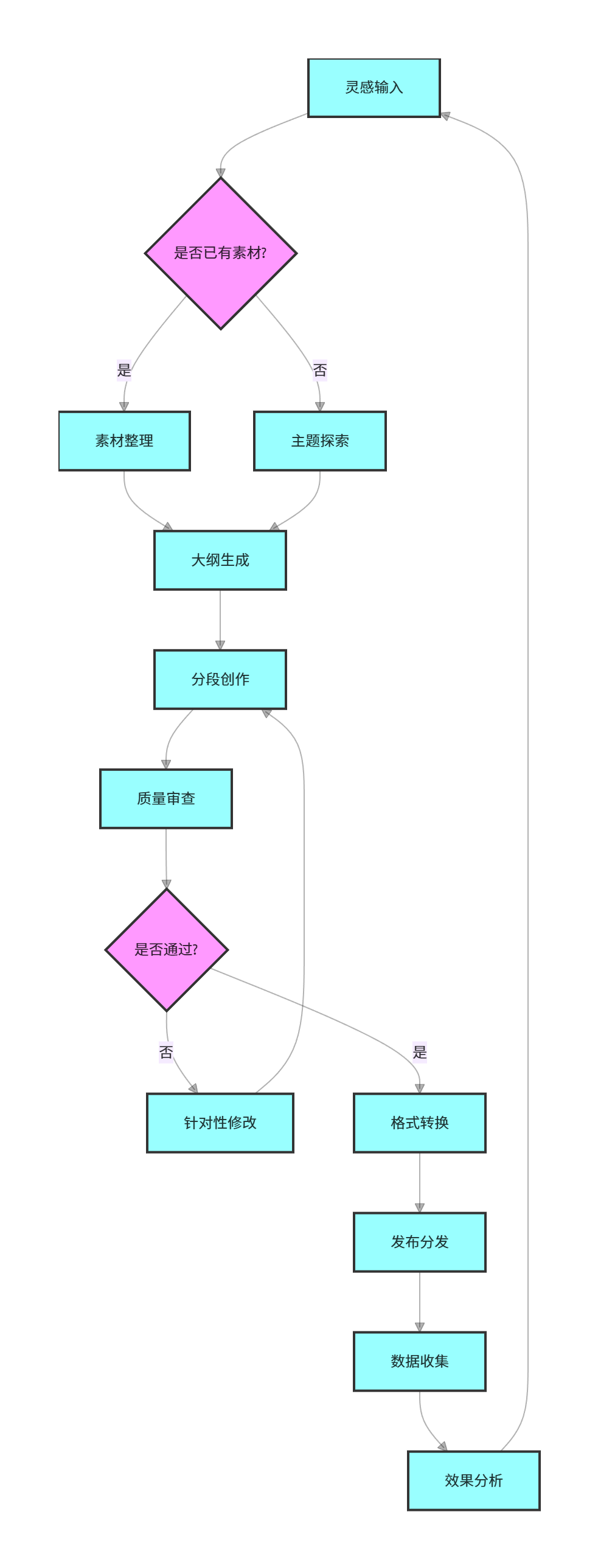
2.1 整体流程图
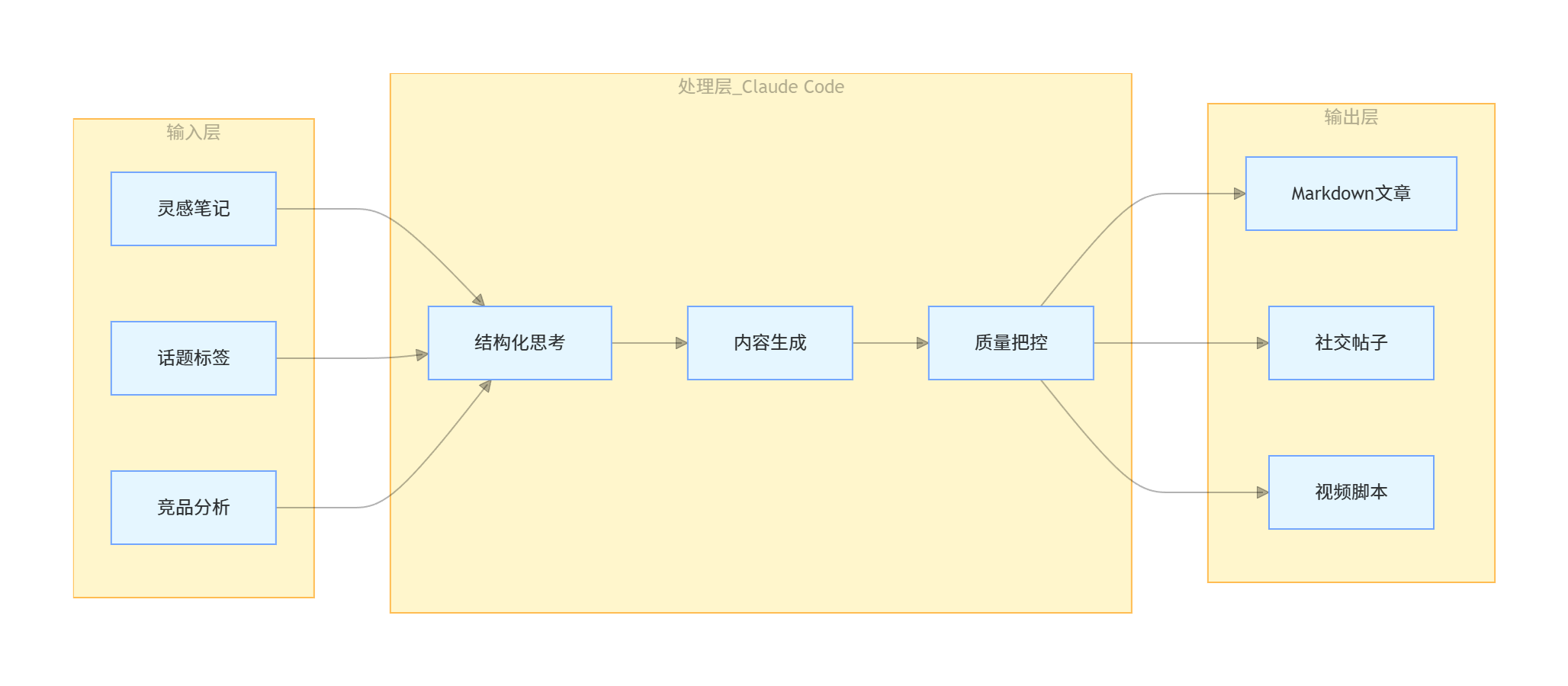
2.2 核心模块架构
三、实战代码实现
3.1 灵感捕捉器
第一个痛点是:灵感来得快去得也快。我写了一个简单的灵感捕捉脚本:
# capture_inspiration.py
import json
from datetime import datetime
from pathlib import Path
class InspirationCapture:
"""灵感捕捉工具 - 记录稍纵即逝的想法"""
def __init__(self, storage_path="inspirations.json"):
self.storage_path = Path(storage_path)
self._init_storage()
def _init_storage(self):
"""初始化存储文件"""
if not self.storage_path.exists():
self.storage_path.write_text(json.dumps([]))
def capture(self, idea: str, tags: list = None, context: str = ""):
"""
捕捉灵感
Args:
idea: 灵感内容
tags: 标签列表
context: 背景/上下文
"""
record = {
"id": self._generate_id(),
"timestamp": datetime.now().isoformat(),
"idea": idea,
"tags": tags or [],
"context": context,
"status": "pending"  # pending, developing, published
}
self._append_record(record)
return record["id"]
def _generate_id(self):
"""生成唯一ID"""
return datetime.now().strftime("%Y%m%d%H%M%S")
def _append_record(self, record):
"""追加记录到文件"""
data = json.loads(self.storage_path.read_text())
data.append(record)
self.storage_path.write_text(json.dumps(data, indent=2, ensure_ascii=False))
def get_pending_ideas(self):
"""获取待处理的灵感"""
data = json.loads(self.storage_path.read_text())
return [item for item in data if item["status"] == "pending"]
# 使用示例
if __name__ == "__main__":
capturer = InspirationCapture()
# 快速记录一个灵感
capturer.capture(
idea="写一篇关于Claude Code工作流的文章",
tags=["AI", "Claude", "工作流"],
context="最近很多人问我如何高效使用AI工具"
)
3.2 与Claude Code集成
有了灵感库,接下来是让Claude Code帮我们扩展成大纲:
# 让Claude Code读取灵感并生成大纲
claude-code "请读取inspirations.json中最新的一条pending灵感,基于它生成一篇技术文章的大纲。要求:
1. 文章类型:教程/实战经验
2. 目标读者:有一定基础的开发者
3. 大纲结构:包含引言、核心内容(3-5个小节)、代码示例、总结
4. 输出格式:Markdown"
3.3 内容生成工作流
这是核心部分——让Claude Code分段生成内容,同时保持质量:
# content_workflow.py
import subprocess
import time
from pathlib import Path
class ContentWorkflow:
"""AI驱动的内容创作工作流"""
def __init__(self, claude_code_path="claude-code"):
self.claude_path = claude_code_path
self.work_dir = Path("articles")
self.work_dir.mkdir(exist_ok=True)
def generate_outline(self, inspiration_data):
"""
生成文章大纲
Args:
inspiration_data: 灵感数据字典
"""
prompt = f"""
基于以下灵感生成文章大纲:
灵感内容:{inspiration_data['idea']}
标签:{', '.join(inspiration_data['tags'])}
背景:{inspiration_data.get('context', '')}
要求:
1. 大纲要具体到每个小节的标题
2. 标注哪些部分需要代码示例
3. 估算每个小节的字数
4. 输出为Markdown格式
"""
return self._call_claude(prompt)
def generate_section(self, outline, section_title):
"""
生成指定小节的内容
Args:
outline: 完整大纲
section_title: 要生成的小节标题
"""
prompt = f"""
你正在写一篇文章,大纲如下:
{outline}
现在请撰写"{section_title}"这一小节的完整内容。
要求:
1. 内容要充实,有具体例子
2. 如果涉及代码,请提供完整可运行的代码
3. 保持技术专业性,但要易懂
4. 字数符合大纲估算
"""
return self._call_claude(prompt)
def _call_claude(self, prompt):
"""
调用Claude Code
这是一个简化示例,实际中你可以使用Claude Code的API或CLI
"""
# 实际项目中,这里应该调用Claude Code的接口
# 这里用伪代码示意
result = subprocess.run(
[self.claude_path, prompt],
capture_output=True,
text=True
)
return result.stdout
def review_content(self, content):
"""
内容审查 - 让AI帮忙检查质量
Args:
content: 待审查的内容
"""
review_prompt = f"""
请从以下维度审查这篇文章,给出改进建议:
{content}
审查维度:
1. 逻辑是否清晰
2. 技术准确性
3. 可读性
4. 是否有遗漏的关键点
5. 标题是否吸引人
请以结构化的方式输出问题和建议。
"""
return self._call_claude(review_prompt)
def assemble_article(self, sections_data):
"""
组装完整文章
Args:
sections_data: 各小节内容字典
"""
article = []
article.append("# " + sections_data.get("title", ""))
article.append("\n")
for section, content in sections_data.get("sections", {}).items():
article.append(f"## {section}\n")
article.append(content)
article.append("\n\n")
return "".join(article)
3.4 质量审查自动化
内容生成后,质量把关很重要:
# quality_checker.py
import re
from typing import List, Dict
class ContentQualityChecker:
"""内容质量检查器"""
def __init__(self):
self.checks = [
self._check_word_count,
self._check_code_blocks,
self._check_readability,
self._check_structure
]
def check(self, content: str, requirements: Dict) -> Dict:
"""
执行所有检查
Args:
content: 待检查内容
requirements: 要求字典(如最小字数等)
"""
results = {
"passed": True,
"issues": [],
"warnings": []
}
for check_func in self.checks:
result = check_func(content, requirements)
if not result["passed"]:
results["passed"] = False
results["issues"].append(result["message"])
elif result.get("warning"):
results["warnings"].append(result["warning"])
return results
def _check_word_count(self, content: str, requirements: Dict) -> Dict:
"""检查字数"""
word_count = len(content)
min_words = requirements.get("min_words", 1000)
if word_count < min_words:
return {
"passed": False,
"message": f"字数不足:当前{word_count}字,要求至少{min_words}字"
}
return {"passed": True}
def _check_code_blocks(self, content: str, requirements: Dict) -> Dict:
"""检查代码块"""
code_blocks = re.findall(r'```[\s\S]*?```', content)
required_blocks = requirements.get("min_code_blocks", 1)
if len(code_blocks) < required_blocks:
return {
"passed": False,
"message": f"代码块不足:当前{len(code_blocks)}个,要求至少{required_blocks}个"
}
return {"passed": True}
def _check_readability(self, content: str, requirements: Dict) -> Dict:
"""检查可读性"""
# 检查段落长度
paragraphs = content.split('\n\n')
long_paragraphs = [p for p in paragraphs if len(p) > 500]
if long_paragraphs:
return {
"passed": True,
"warning": f"发现{len(long_paragraphs)}个超长段落,建议拆分以提高可读性"
}
return {"passed": True}
def _check_structure(self, content: str, requirements: Dict) -> Dict:
"""检查结构完整性"""
required_sections = requirements.get("required_sections", [])
missing = []
for section in required_sections:
if section not in content:
missing.append(section)
if missing:
return {
"passed": False,
"message": f"缺少必要章节:{', '.join(missing)}"
}
return {"passed": True}
四、完整工作流示例
把上面的模块整合起来:
# main_workflow.py
from capture_inspiration import InspirationCapture
from content_workflow import ContentWorkflow
from quality_checker import ContentQualityChecker
def main():
# 初始化各模块
capturer = InspirationCapture()
workflow = ContentWorkflow()
checker = ContentQualityChecker()
# 获取待处理的灵感
pending_ideas = capturer.get_pending_ideas()
if not pending_ideas:
print("没有待处理的灵感")
return
# 选择最新的一条
idea = pending_ideas[0]
print(f"正在处理灵感: {idea['idea']}")
# 步骤1: 生成大纲
print("生成大纲...")
outline = workflow.generate_outline(idea)
print(outline)
# 步骤2: 分段生成内容
print("生成内容...")
sections = {}
# 这里简化处理,实际应该解析outline中的各个小节
section_titles = ["引言", "核心实现", "代码示例", "总结"]
for title in section_titles:
print(f"  正在生成: {title}")
content = workflow.generate_section(outline, title)
sections[title] = content
time.sleep(1)  # 避免请求过快
# 步骤3: 质量检查
print("质量检查...")
full_content = workflow.assemble_article({
"title": idea['idea'],
"sections": sections
})
quality_result = checker.check(full_content, {
"min_words": 1500,
"min_code_blocks": 3,
"required_sections": ["引言", "核心实现", "总结"]
})
if quality_result["passed"]:
print("质量检查通过!")
else:
print("质量检查未通过:")
for issue in quality_result["issues"]:
print(f"  - {issue}")
# 步骤4: AI审查
print("AI审查中...")
review = workflow.review_content(full_content)
print(review)
# 步骤5: 保存文章
output_path = f"articles/{idea['id']}.md"
with open(output_path, 'w', encoding='utf-8') as f:
f.write(full_content)
print(f"文章已保存至: {output_path}")
if __name__ == "__main__":
main()
五、让AI工作起来还不够,需要让它"为你工作"
工具再好,用的人不对,效果也会大打折扣。我发现很多开发者用AI有一个误区:把AI当工具用,而不是当搭档用。
什么区别?
最佳实践:
经过多个项目的验证,我总结了几个关键点:1) 做好异常处理 2) 添加详细日志 3) 单元测试覆盖核心逻辑。 这些看似简单,但能避免很多生产环境问题。
- 工具模式:你需要什么,问什么,AI答什么,完事
- 搭档模式:你告诉AI目标和背景,让它参与决策,共同完成项目
我举个例子:
❌ 工具模式:
"帮我写一个Python函数读取JSON文件"✅ 搭档模式:
"我正在构建一个内容创作系统,需要读取灵感数据。
考虑到性能和可扩展性,你觉得用什么存储方式比较好?
如果用JSON,怎么处理并发写入的问题?"
看出区别了吗?第二种方式,AI不仅给你代码,还会帮你思考架构,指出你没想到的问题。
六、创作不是终点,分享才是
写完文章只是完成了一半,另一半是:让更多人看到你的内容。
这也是我为什么喜欢在脉脉这样的技术社区分享的原因。这里有真实的开发者,有高质量的讨论,你的内容能真正触达到需要的人。
最近我发现脉脉在搞一个挺有意思的活动——【AI创作者xAMA活动】,刚好适合像我这样喜欢分享技术内容的人:
- 发帖、发评论、关注,就能赚积分
- 积分可以兑换现金红包、商单激励、视频会员
- 最重要的是:活动长期有效,不是那种赶时间的热闹

说实话,这种活动挺打动我的。不是因为它能赚多少钱,而是它在鼓励持续创作,而不是一次性"薅羊毛"。好的创作者生态,应该让持续输出的人得到回报。
七、总结
AI时代的创作,核心不是"让AI替你写",而是"让AI放大你的能力":
| 能力类型 | AI擅长 | 人类必须做 |
|---|---|---|
| 信息收集 | ✅ 快速整合 | ❌ 确定方向 |
| 结构梳理 | ✅ 逻辑框架 | ❌ 价值判断 |
| 内容生成 | ✅ 快速产出 | ❌ 注入个性 |
| 质量把控 | ✅ 基础检查 | ❌ 最终把关 |
| 读者连接 | ❌ | ✅ 情感共鸣 |
最好的工作流,是让AI做它擅长的事,让你做只有你能做的事。
希望这篇文章能给你一些启发。如果你也在构建自己的AI创作工作流,欢迎在评论区分享你的经验——好的想法,值得被更多人看到。
参考资源
- Claude Code 官方文档
- Python自动化实践
- 技术写作最佳实践
- 文章首发于脉脉,欢迎关注我的专栏获取更多AI工具实战内容
- 相关活动:如果你也在用AI辅助创作,不妨参与一下AI创作者xAMA活动,边分享边赚点小奖励~
✍️ 坚持用 清晰易懂的图解 + 可落地的代码,让每个知识点都 简单直观!
座右铭:“道路是曲折的,前途是光明的!”
