
在 LangGraph 中,add_conditional_edges 是构建动态工作流的关键,用于创建基于条件判断的分支路径;它允许工作流根据当前状态动态决定下一步的执行路径,种模式使 LangGraph 能够处理复杂的、状态驱动的对话流程,特别是在需要工具调用和多次交互的场景中。
示例
# State Managementclass State(TypedDict):messages: Annotated[List[AnyMessage], add_messages] # Nodesdef chat_node(state: State) -> State:state["messages"] = chat_llm.invoke({"messages": state["messages"]})return state # Building the graphgraph_builder = StateGraph(State)graph_builder.add_node("chat_node", chat_node)graph_builder.add_node("tool_node", ToolNode(tools=tools))graph_builder.add_edge(START, "chat_node")graph_builder.add_conditional_edges("chat_node", tools_condition, {"tools": "tool_node", "__end__": END})graph_builder.add_edge("tool_node", "chat_node")graph = graph_builder.compile(checkpointer=MemorySaver())return graph
解读:
上述示例的执行流程如下:
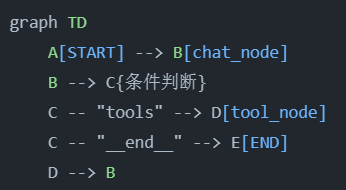
细节描述
执行工具节点
class ToolNode:def __init__(self, tools):self.tools = toolsdef __call__(self, state: State) -> State:# 执行工具调用tool_results = []for tool_call in state["messages"][-1].tool_calls:tool = self.tools[tool_call["name"]]result = tool.invoke(tool_call["args"])tool_results.append(result)return {"messages": tool_results}
状态更新:将工具执行结果作为新消息添加
工具节点执行后,通过 graph_builder.add_edge("tool_node", "chat_node") 返回聊天节点继续生成对工具结果的响应
重点关注
add_conditional_edges,这个方法包含三个核心参数
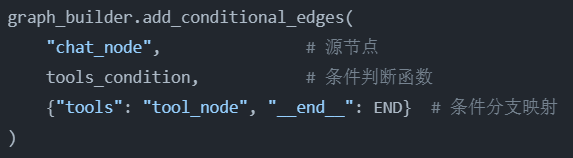
A、源节点:条件分支的起点
B、条件函数:决定分支路径的函数
C、分支映射:将条件函数返回值映射到目标节点的字典
条件函数
条件函数是一个自定义函数,它接收当前状态作为输入,返回一个字符串值,表示下一步应该执行的路径。
在上面示例中,tools_condition 函数可能类似这样:
def tools_condition(state: State) -> str:"""判断是否需要调用工具"""# 获取最后一条消息last_message = state["messages"][-1]# 检查是否是工具调用请求if hasattr(last_message, "tool_calls") and last_message.tool_calls:return "tools" # 需要调用工具else:return "__end__" # 结束对话
tools_condition(LangGraph源码)
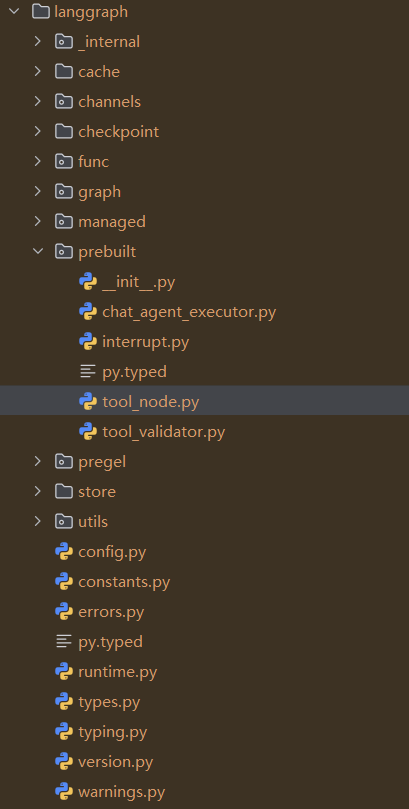
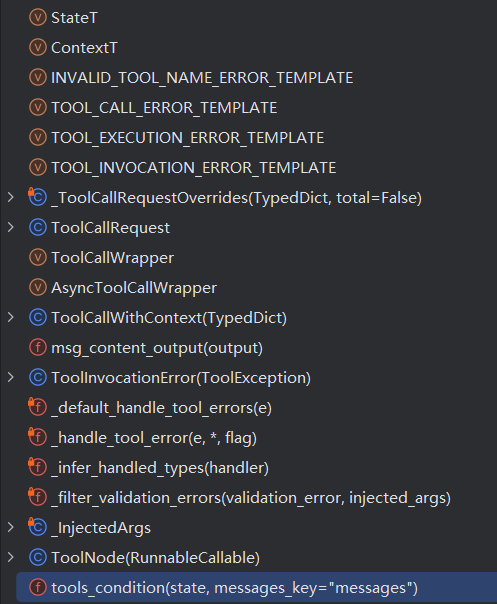
def tools_condition(state: list[AnyMessage] | dict[str, Any] | BaseModel,messages_key: str = "messages",
) -> Literal["tools", "__end__"]:"""Conditional routing function for tool-calling workflows.This utility function implements the standard conditional logic for ReAct-styleagents: if the last `AIMessage` contains tool calls, route to the tool executionnode; otherwise, end the workflow. This pattern is fundamental to most tool-callingagent architectures.The function handles multiple state formats commonly used in LangGraph applications,making it flexible for different graph designs while maintaining consistent behavior.Args:state: The current graph state to examine for tool calls. Supported formats:- Dictionary containing a messages key (for `StateGraph`)- `BaseModel` instance with a messages attributemessages_key: The key or attribute name containing the message list in the state.This allows customization for graphs using different state schemas.Returns:Either `'tools'` if tool calls are present in the last `AIMessage`, or `'__end__'`to terminate the workflow. These are the standard routing destinations fortool-calling conditional edges.Raises:ValueError: If no messages can be found in the provided state format.Example:Basic usage in a ReAct agent:```pythonfrom langgraph.graph import StateGraphfrom langchain.tools import ToolNodefrom langchain.tools.tool_node import tools_conditionfrom typing_extensions import TypedDictclass State(TypedDict):messages: listgraph = StateGraph(State)graph.add_node("llm", call_model)graph.add_node("tools", ToolNode([my_tool]))graph.add_conditional_edges("llm",tools_condition,  # Routes to "tools" or "__end__"{"tools": "tools", "__end__": "__end__"},)```Custom messages key:```pythondef custom_condition(state):return tools_condition(state, messages_key="chat_history")```!!! noteThis function is designed to work seamlessly with `ToolNode` and standardLangGraph patterns. It expects the last message to be an `AIMessage` whentool calls are present, which is the standard output format for tool-callinglanguage models."""if isinstance(state, list):ai_message = state[-1]elif (isinstance(state, dict) and (messages := state.get(messages_key, []))) or (messages := getattr(state, messages_key, [])):ai_message = messages[-1]else:msg = f"No messages found in input state to tool_edge: {state}"raise ValueError(msg)if hasattr(ai_message, "tool_calls") and len(ai_message.tool_calls) > 0:return "tools"return "__end__"
分支映射
分支映射是一个字典,将条件函数的返回值映射到具体的节点或特殊端点:
{"tools": "tool_node",  # 当条件返回 "tools" 时,跳转到 tool_node"__end__": END         # 当条件返回 "__end__" 时,结束工作流
}
特殊端点:
START:工作流起点END:工作流终点
条件分支的高级应用
多分支条件
可以创建包含多个可能路径的条件分支
def advanced_condition(state: State) -> str:last_message = state["messages"][-1]if "help" in last_message.content:return "help_flow"elif "purchase" in last_message.content:return "checkout_flow"elif "cancel" in last_message.content:return "cancellation_flow"else:return "__end__"graph_builder.add_conditional_edges("chat_node",advanced_condition,{"help_flow": "help_node","checkout_flow": "checkout_node","cancellation_flow": "cancellation_node","__end__": END}
)
嵌套条件分支
# 第一层条件分支
graph_builder.add_conditional_edges("initial_node",determine_flow_type,{"support": "support_flow", "sales": "sales_flow"}
)# 支持流中的子分支
graph_builder.add_conditional_edges("support_flow",support_condition,{"technical": "tech_support_node", "billing": "billing_support_node"}
)# 销售流中的子分支
graph_builder.add_conditional_edges("sales_flow",sales_condition,{"new": "new_customer_node", "existing": "existing_customer_node"}
)
最佳实践
保持条件函数纯净
只读取状态,不修改状态
避免副作用
明确的返回值
使用描述性的字符串作为返回值
确保返回值在分支映射中有对应项
错误处理
def safe_condition(state: State) -> str:try:# 业务逻辑except Exception as e:# 记录错误state["errors"].append(str(e))return "error_handling"
状态设计
确保状态包含条件判断所需的所有信息
使用清晰的字段命名